Thank you for signing up for our newsletter!
In these regular emails you will find the latest updates from Canonical and upcoming events where you can meet our team.Close
Thank you for contacting us. A member of our team will be in touch shortly. Close
An error occurred while submitting your form.
Please try again or
file a bug report.
Close
The home for innovators, Ubuntu is a place where developers can create what previously lived solely in the realms of fiction. The internet of things, the cloud, and robots are world changing technologies and they’re all running Ubuntu. With an estimated worldwide spending figure of $103bn by 2020, according to IDC, the field of robotics ...
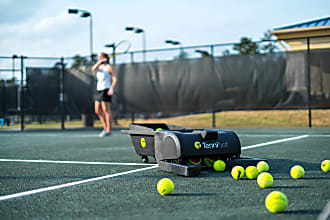
From manufacturing plants to homes, robots have become a staple in the modern world for making life easier. This ability to boost convenience is what the startup company, Tennibot, is looking to bring to tennis courts around the world. Tennibot is the world’s first robotic tennis ball collector, or alternatively, an autonomous ball boy. ...
As robotics become increasingly prevalent in all sectors and expand outside the manufacturing industry, it is no surprise that IDC predicts worldwide spending on robotics to reach $103bn in 2018. A UK based startup, BotsAndUs, are looking to capitalise on this opportunity and have created an advanced social robot – Bo – primarily for use ...
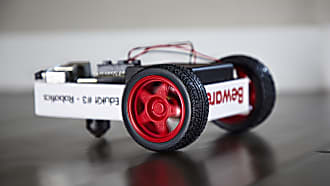
This is the fifth (and final) blog post in this series about creating your first robot with ROS and Ubuntu Core. In the previous post we discussed methods of control, did a little math, and wrote the ROS driver for our robot. But it still required several nodes to be running at once, and sharing ...
This is the fourth blog post in this series about creating your first robot with ROS and Ubuntu Core. In the previous post we worked on getting data out of the wireless controller and into ROS in a format meant for controlling differential drive robots like ours: the Twist message. Today we’re going to create ...
This is the third blog post in this series about creating your first robot with ROS and Ubuntu Core. In the previous post you were introduced to the Robot Operating System (ROS), and got your robot moving by ROSifying one of the CamJam worksheets. Today we’re going to move beyond the CamJam worksheets, and work ...
This is the second blog post in this series about creating your first robot with ROS and Ubuntu Core. In the previous post we walked through all the hardware necessary to follow this series, and introduced Ubuntu Core, the operating system for IoT devices. We installed it on our Raspberry Pi, and used it to ...
Some time ago I created a blog/video series that walked the reader through creating a prototype using the Robot Operating System (ROS) and taking it to production using Ubuntu Core. However, that series was intended more for robotics professionals; it assumed quite a bit of ROS knowledge, and required some costly equipment (the robot was ...
Robotics development has seen great expansion in recent years. Some roboticists strongly believe that this expansion is not only due to the rise of inexpensive sensors and actuators but also to the new software trends enabling code sharing and reuse at a much larger scale than ever before. We spoke to Mohamed Saad Ibn Seddik, ...
This is the second post in a series of two by guest bloggers from Husarion; Domink Nowak and Michal Zieliński. The first blog can be read here. This blog picks up on why Husarion use Ubuntu… Ubuntu has a very wide collection of packages, both in official repositories and supplied by third-parties. For example, the Robot Operating System ...
This is the first in a series of two posts by guest blogger; Dominik Nowak, CEO at Husarion. We’ve seen many breakthroughs happening in the IT industry over the last decade. Arguably the most meaningful one on the consumer side was the adoption of smartphones and mobile development. What’s the next big thing, now that ...